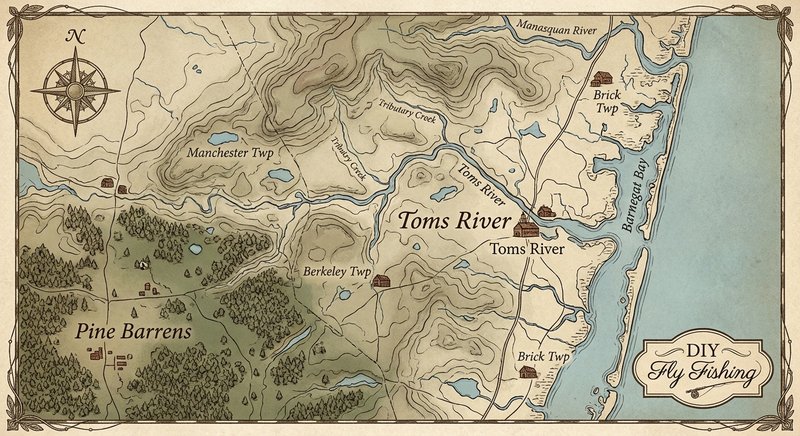
Toms River
Fly fishing in New Jersey · beginner · Best seasons: spring
Target Species
Rainbow Trout, Brown Trout
About This Water
Pine Barrens stream with unique tea-colored water. Stocked trout and native pickerel fishing.
Fishing Recommendations
As an expert guide who has spent years navigating the unique waters of the Mid-Atlantic, I can tell you that the Toms River in New Jersey is a hidden gem. While many anglers head north to the Musconetcong or the Pequest, the Toms offers a distinct "Pine Barrens" fly fishing experience that is unlike anything else in the state.
Here is your comprehensive guide to fly fishing the Toms River.
🎣 Location Overview
The Toms River is a low-gradient coastal plain stream. What makes it special is its tannic water—often referred to as "cedar water." The water has a tea-colored tint due to the tannins from the surrounding Atlantic White Cedars and iron deposits in the soil.
The most popular section for fly anglers is the Year-Round Trout Conservation Area (TCA). This stretch, roughly 1 mile long, begins at the bridge on Enders Lane and extends downstream to the Route 570 bridge (Glen Ridge Parkway). This area features sandy bottoms interspersed with gravel, deep undercut banks, and a heavy amount of woody debris (downed trees). It feels intimate, wild, and much more remote than its suburban surroundings suggest.
🐟 Target Species & Behavior
The Toms River is primarily a "put-and-take" fishery, but the TCA section allows for excellent holdover potential.
- Rainbow Trout: These are the most common residents post-stocking. They tend to hold in the "faster" water (riffles and bubble lines) and are generally more aggressive toward flashy flies.
- Brown Trout: The "kings" of the Toms. Browns love the dark, tannic water and the abundant structure. They are notorious for tucking deep under submerged logs and undercut banks.
- Behavior: Because of the dark water, fish here rely heavily on vibration and silhouette. They can be spooked easily in the shallow, sandy stretches, but the dark water provides them a sense of security that allows them to hold in surprisingly shallow spots if there is overhead cover.
📅 Best Times to Fish
Optimal Seasons
- Spring (Peak): April and May are the prime months. New Jersey Division of Fish & Wildlife stocks the river heavily during this window. The water temperatures are perfect (50°F–60°F), and the insect activity is at its highest.
- Late Spring: Early June can be fantastic for dry fly action before the summer humidity sets in and water temperatures rise.
Best Times of Day
- Early Spring: Mid-day (11:00 AM – 3:00 PM) is best, as the sun warms the water enough to trigger insect hatches and metabolic activity in the fish.
- Late Spring (May/June): Transition to early morning and late evening. The "evening rise" on the Toms can be magical as caddisflies swarm the cedar banks.
🪰 Recommended Flies & Techniques
The dark water of the Toms dictates your fly choice. You want visibility and movement.
Top Fly Patterns
- Nymphs:
- Gold-Ribbed Hare’s Ear (#14-16): The "buggy" look works great in tannic water.
- Prince Nymph (#12-14): The white wings provide high visibility.
- Pheasant Tail (Flashback) (#16-18): A staple for mimicking the small mayfly nymphs present.
- Dry Flies:
- Elk Hair Caddis (#14-16): Tan or Olive. Caddis are the primary hatch here.
- Adams/Parachute Adams (#14-18): The grey silhouette is a universal producer.
- Hendrickson (#14): Essential for the mid-April hatches.
- Streamers (The Local Secret):
- Woolly Buggers (#8-10): In Black or Olive. Black provides the strongest silhouette against the tea-colored water.
Effective Techniques
- The "Bow-and-Arrow" Cast: The Toms is brushy. You will often find yourself in spots where a traditional backcast is impossible. Master this short-range specialty cast.
- Tight-Line Nymphing: In the deeper holes near logs, use a heavy nymph to get down quickly.
- The Streamer Swing: Cast across and slightly downstream toward the opposite bank, letting the fly swing into the "dark" water under the logs. Be ready for aggressive strikes from Browns.
💡 Pro Tips & Local Knowledge
- Fish the Wood: If you aren't losing a few flies to submerged branches, you aren't fishing where the big Browns are. The Toms is full of "sweepers" (fallen trees). Target the downstream side of these logs.
- Stealth is Key: The bottom is mostly sand. Sound travels easily through it. Wade slowly and try to stay out of the water whenever possible, casting from the bank.
- Polarized Lenses: Yellow or Amber-tinted polarized glasses are a must. They help cut through the "tea" color of the water better than grey or blue lenses, allowing you to see the sandy depressions where trout hold.
- The "Riverwood" Approach: Park at Riverwood Park. There is a well-maintained trail that follows the river. Most people fish right by the bridge; if you walk 15 minutes downstream, you’ll find much less pressured fish.
⚠️ Important Information
- Regulations: The Trout Conservation Area (TCA) has specific rules:
- Minimum size for keeping trout is usually 15 inches (though most fly anglers practice C&R).
- Gear: You must use artificial lures or flies only. No bait.
- Check the NJ Fish & Wildlife Digest for the most current dates and creel limits.
- Access: Main access points are off Route 527 (Whitesville Rd) and Riverwood Park.
- Safety: The Pine Barrens are home to a high concentration of deer ticks. Use Permethrin on your gear and do a thorough tick check after your session. Also, watch for Poison Ivy along the narrow bank trails.
- Licensing: You need a valid New Jersey Fishing License and a Trout Stamp.
The Toms River isn't a "glamour" stream, but for the angler who appreciates stealth, technical casting, and the beauty of the Jersey Pines, it is one of the most rewarding waters in the state. Tight lines!
Bug Hatches & Matching Flies
| Hatch | Type | Peak months | Time of day | Hook sizes | Matching flies |
|---|---|---|---|---|---|
| Blue-Winged Olive Baetis species | mayfly | March, April, September, October | Afternoon | #18-22 | RS2 #18-22, Parachute BWO #18-22, Pheasant Tail Nymph #18-20 |
| Hendrickson Ephemerella subvaria | mayfly | April, May | Afternoon | #12-14 | Hendrickson Dark #12-14, Red Quill #14, Hare's Ear Nymph #12-14 |
| Grannom Caddis Brachycentrus | caddis | April | Morning/Afternoon | #14-16 | Elk Hair Caddis (Black) #14-16, LaFontaine's Deep Sparkle Pupa #14-16 |
| Light Cahill Stenacron candidum | mayfly | June, July | Evening | #14-16 | Light Cahill #14-16, Gold Ribbed Hare's Ear #14-16 |
| Tan Caddis Hydropsyche | caddis | May, June, July, August | Evening | #14-18 | Elk Hair Caddis (Tan) #14-18, Pulsating Pupa #16-18, Peeping Caddis #14-16 |
| Black Ant Formicidae | terrestrial | June, July, August, September | Mid-day | #14-20 | Black Foam Ant #14-18, Cinnamon Ant #16-20 |
| March Brown Maccaffertium vicarium | mayfly | May | Afternoon | #10-12 | March Brown American #10-12, March Brown Emerger #12 |
| Common Midge Chironomidae | midge | January, February, March, December | Late Morning | #20-26 | Zebra Midge #20-22, Griffith's Gnat #20-24, Top Secret Midge #22-24 |
| Green Weenie / Inchworm Lepidoptera larvae | terrestrial | June, July | All Day | #12-16 | Green Weenie #12-16, Foam Inchworm #14 |