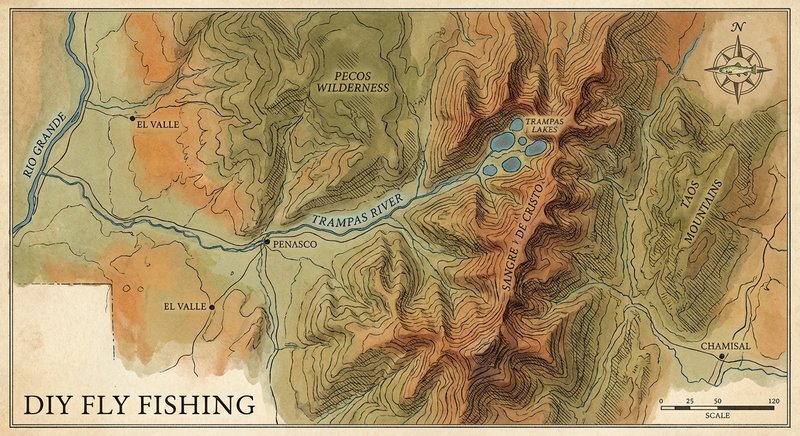
Trampas Lakes
Fly fishing in New Mexico · Advanced · Best seasons: Summer, Fall
Target Species
Cutthroat Trout
About This Water
High alpine lakes in the Pecos Wilderness. Excellent cutthroat fishing.
Fishing Recommendations
As an expert guide in the Sangre de Cristo Mountains, I can tell you that Trampas Lakes represents the quintessential high-alpine fly fishing experience in Northern New Mexico. Situated at approximately 11,400 feet within the Carson National Forest, these glaciated basins offer some of the most stunning scenery and rewarding native trout fishing in the Southwest.
🎣 Location Overview
Trampas Lakes consists of two primary alpine lakes (and a smaller third pond nearby) tucked into a dramatic cirque beneath the 13,000-foot peaks of North and South Truchas.
What makes this area special is its remoteness and purity. This is a "hike-to-play" destination, requiring a strenuous 6-mile trek (one way). Because of the effort involved, the fishing pressure is remarkably low compared to roadside waters. The lakes are crystal clear, cold, and surrounded by jagged granite walls and sub-alpine fir. It is a high-altitude sanctuary for New Mexico’s state fish.
🐟 Target Species & Behavior
The primary draw here is the Rio Grande Cutthroat Trout (RGCT).
- Behavior: These are opportunistic feeders due to the short growing season at 11,000+ feet. They are famously "lookers"—they will often cruise the shoreline in small pods or as loners, patrolling the drop-offs where the shallow "shelf" meets the deep blue water.
- Feeding: Their diet consists mainly of midges, small mayflies, caddis, and a significant amount of terrestrial insects (ants, beetles, grasshoppers) blown onto the water from the surrounding ridges.
- Holding Pattern: During the morning, look for them in the shallows near the inlets. As the sun gets higher, they retreat to the ledge where the bottom drops off, though they will rise to the surface for a well-placed dry fly all day long.
📅 Best Times to Fish
- Optimal Months: July through September.
- July: The ice has usually been off for a few weeks, and the fish are ravenous.
- August: Prime time for terrestrial fishing (hoppers and ants).
- September: The most beautiful time. The aspens are turning, the air is crisp, and the fish are putting on weight for winter.
- Time of Day:
- 10:00 AM – 4:00 PM: Unlike lower elevation rivers, you don't need to be there at dawn. In the high country, the water needs to warm up a few degrees to activate the insects and the trout's metabolism.
- Weather Window: Watch for the "Monsoon" season in July and August. Lightning is a serious threat on these ridges. Fish hard in the morning, and be prepared to take cover by 2:00 PM when the clouds build.
🪰 Recommended Flies & Techniques
Top Fly Patterns
- Dry Flies:
- Parachute Adams (#16-20): The gold standard for alpine lakes.
- Amy’s Ant or Fat Albert (#12-14): Perfect for the windy afternoons when terrestrials are hitting the water.
- Elk Hair Caddis (#16): Great for the evening "skating" technique.
- Nymphs:
- Pheasant Tail (#18-20): Mimics the small mayflies present in the silt.
- Zebra Midge (Red or Black, #18-22): Essential for when the water is glassy and fish are feeding sub-surface.
- Streamers:
- Thin Mint or Black Wooly Bugger (#10-12): Strip these slowly along the deep ledges to induce a territorial strike.
Techniques & Presentation
- The "Sight and Wait": Because the water is so clear, stealth is vital. Stay low and back from the bank. Spot a cruising fish, lead it by 5–10 feet with a dry fly, and let it sit perfectly still.
- Dry-Dropper: A popular choice. Use a buoyant hopper on top with a 3-foot 6X fluorocarbon dropper to a Zebra Midge.
- The "Twitch": If a fish is staring at your dry fly but won't commit, give it a tiny, microscopic twitch. This often triggers an instinctive "eat it before it gets away" response.
💡 Pro Tips & Local Knowledge
- Focus on the Inlets: Even a tiny trickle of water entering the lake brings in oxygen and food. These are hotspots.
- The Upper Lake vs. Lower Lake: Most people stop at the first lake. The upper lake (further west) often holds slightly larger fish and sees even fewer people.
- The Wind is Your Friend: A "riffle" on the water's surface breaks up your silhouette and the fish's window, making them less spooky. Use the wind to your advantage to drift terrestrials into the "feeding lanes."
- Gear Choice: A 9-foot 4-weight or 5-weight rod is ideal. Use long leaders (9–12 feet) tapering down to 6X tippet. These fish are leader-shy in the clear water.
⚠️ Important Information
Access
- Trailhead: Trampas Lakes Trailhead (#31) is located at the end of Forest Road 107, near the village of El Valle.
- The Hike: It is a 12-mile round trip with approximately 2,500 feet of elevation gain. You must be in good physical condition and prepared for high-altitude hiking.
Regulations & Permits
- License: A valid New Mexico Fishing License is required, along with a "Habitat Management & Access Validation."
- Special Rules: Trampas Lakes are within the Pecos Wilderness. Generally, Rio Grande Cutthroat waters are Catch and Release or have very strict bag limits. Check current New Mexico Department of Game and Fish (NMDGF) proclamations for the "Special Trout Water" designations.
Special Considerations
- Safety: This is bear and mountain lion country. Store food properly if camping.
- Leave No Trace: This is a fragile alpine ecosystem. Pack out everything you pack in.
- Wading: Wading is generally unnecessary and often counter-productive, as it stirs up silt and scares the cruising fish. Fish from the bank or the large granite boulders.
Bug Hatches & Matching Flies
| Hatch | Type | Peak months | Time of day | Hook sizes | Matching flies |
|---|---|---|---|---|---|
| Callibaetis (Speckled Duns) Callibaetis ferrugineus | mayfly | July, August | Late Morning/Afternoon | #14-16 | Parachute Adams #14-16, Callibaetis Nymph #14-16, Quigley's Cripple #14-16 |
| Chironomids (Midges) Chironomidae | midge | June, July, August, September | All Day | #18-22 | Zebra Midge #18-22, Griffith's Gnat #20-22, Palomino Midge #20-22 |
| Freshwater Scuds Gammarus lacustris | terrestrial | June, July, August, September | All Day | #14-18 | Ray Charles #14-18, Olive Scud #14-16 |
| Flying Ants Formicidae | terrestrial | August, September | Afternoon | #14-18 | Black Foam Ant #14-18, Cinnamon Ant #16-18 |
| Damselflies Enallagma | terrestrial | July, August | Morning/Afternoon | #10-14 | Marabou Damsel Nymph #12-14, Adult Damsel #10-12 |
| Spotted Sedge Hydropsyche | caddis | July, August | Evening | #14-16 | Elk Hair Caddis #14-16, LaFontaine's Deep Sparkle Pupa #14-16 |
| Yellow Sallies Isoperla | stonefly | July | Afternoon/Evening | #14-16 | Yellow Stimulator #14-16, Iron Lotus #16 |
| Water Boatmen Corixidae | terrestrial | August, September | Afternoon | #16-18 | Water Boatman #16-18, Prince Nymph #14-18 |