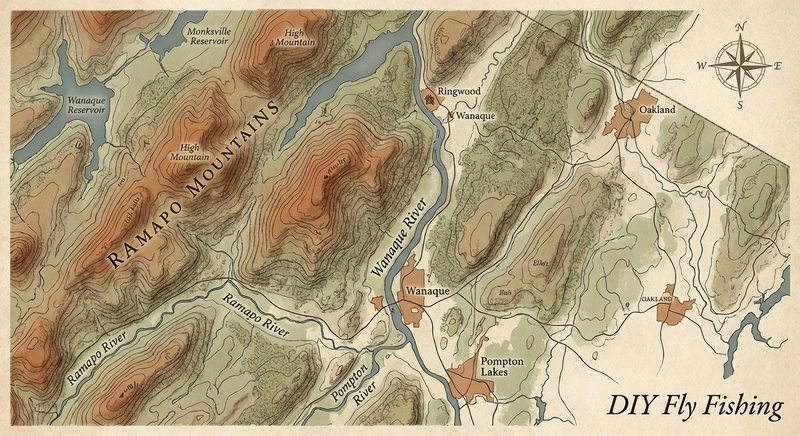
Wanaque River
Fly fishing in New Jersey · intermediate · Best seasons: spring, summer, fall
Target Species
Brown Trout, Rainbow Trout
About This Water
Passaic County tailwater below Wanaque Reservoir. Cool releases support trout through summer months.
Fishing Recommendations
The Wanaque River in Passaic County, New Jersey, is a "hidden in plain sight" gem. While many anglers flock to the Musconetcong or the South Branch of the Raritan, the Wanaque offers a high-quality, technical fishing experience for those looking to stay in the northern part of the state. It is primarily a tailwater-style fishery influenced by the Wanaque Reservoir, providing a mix of pocket water, deep runs, and classic pools.
🎣 Location Overview
The Wanaque River flows through a suburban landscape, yet once you are on the water, the thick canopy and rocky terrain make it feel surprisingly secluded. It is characterized by its high gradient in some sections, leading to excellent pocket water and oxygenated riffles.
What makes it special is the Delayed Harvest (DH) section, which spans about a mile from the Greenwood Lake Turnpke bridge downstream to the Wanaque Avenue bridge. This regulation ensures a high density of fish through the spring and early summer, making it one of the most productive stretches of water in Northern New Jersey.
🐟 Target Species & Behavior
The river is heavily stocked with Brown Trout and Rainbow Trout.
- Rainbow Trout: These are often found in the faster "bubbly" water at the head of pools. They are aggressive and prone to taking flashy nymphs and small streamers.
- Brown Trout: The Browns tend to seek out "structure"—undercut banks, submerged logs, or the dark shadows behind large boulders. As the season progresses, the holdover Browns become quite "sporty" (wary) and require a stealthy approach and fine tippets.
- Feeding Behavior: Early in the season, they are opportunistic foragers. As the hatches begin in late April, they become more selective, focusing on specific life stages of aquatic insects (nymphs, emergers, and spent spinners).
📅 Best Times to Fish
Spring (April – June)
This is the prime window. The NJ Division of Fish & Wildlife stocks the river heavily. Water temperatures are ideal (50°F–60°F), and the major hatches occur during this time.
Summer (July – August)
The Wanaque can suffer from low flows and rising temperatures in mid-summer. Pro Tip: Carry a thermometer. If the water hits 70°F, stop fishing to protect the trout. Target the early morning hours (6:00 AM – 10:00 AM) when the water is coolest.
Fall (September – November)
Fall is fantastic. The crowds vanish, and the state often performs a "Fall Stocking." The cooling water temperatures trigger a secondary feeding frenzy as trout prepare for winter. The foliage along the river is also spectacular.
🪰 Recommended Flies & Techniques
Dry Flies
- Caddis: The Wanaque has a massive caddis population. Use Elk Hair Caddis (Size 14-18) in Tan or Olive.
- Mayflies: Blue Winged Olives (BWO) are a staple (Size 18-22), especially on overcast days. Light Cahills and Adams work well in May and June.
- Terrestrials: In late summer/fall, don't overlook Ants and Beetles (Size 16-18) dropped right against the banks.
Nymphing (Most Productive)
The rocky bottom makes nymphing the "bread and butter" of the Wanaque.
- Patterns: Pheasant Tail (16-20), Gold-Ribbed Hare’s Ear (14-18), and Zebra Midges (18-22).
- The "Junk" Fly: Because it is a stocked river, Mop Flies (Chartreuse) and Squirmy Wormies can be incredibly effective after a rain event.
Streamers
- Woolly Buggers: Black or Olive (Size 8-12). Swing these through the deeper pools or "strip" them through the faster runs to trigger aggressive strikes.
💡 Pro Tips & Local Knowledge
- The "Delayed Harvest" Strategy: Within the DH section, you must use artificial lures/flies only. Because these fish are caught and released frequently, they become "educated." Downsize your tippet to 6X or 7X fluorocarbon and use smaller flies than you think you need.
- Master the Pocket Water: Don't just fish the big pools. There are hundreds of small "pockets" behind boulders. High-stick nymphing (European Nymphing style) is deadly here because it allows you to keep your line off the complex currents, preventing drag.
- Watch the Flow: The river can rise quickly after heavy rain due to suburban runoff. Check the USGS gauges nearby if available, or look for water clarity. If it’s "chocolate milk," wait 24 hours for it to clear to a "tannin" tea color—that’s the magic fishing window.
⚠️ Important Information
- Access Point: The most popular access is off Doty Road in Haskell/Riverdale. There is parking available near the bridge and along the designated park areas.
- Regulations:
- A New Jersey Fishing License and Trout Stamp are required for everyone 16 and older.
- Delayed Harvest Rules: From early April until the Monday after Father's Day, the DH section is Catch and Release Only. After that date, standard size and creel limits apply. Always check the current NJ Freshwater Fishing Digest for specific dates.
- Wading Safety: The Wanaque is notoriously slippery. The rocks are covered in "didmo" or algae. Studded wading boots and a wading staff are highly recommended to avoid a dunking.
Bug Hatches & Matching Flies
| Hatch | Type | Peak months | Time of day | Hook sizes | Matching flies |
|---|---|---|---|---|---|
| Blue Winged Olive Baetis | mayfly | April, May, September, October | Midday | #18-22 | RS2 #18-22, BWO Sparkle Dun #18-20, Pheasant Tail #18-20 |
| Hendrickson Ephemerella subvaria | mayfly | April, May | Afternoon | #12-14 | Hendrickson Dark #12-14, Red Quill #14, Hendrickson Wet #12-14 |
| Sulphur Ephemerella invaria/dorothea | mayfly | May, June | Evening | #14-18 | Sulphur Parachute #14-18, Sulphur Cripple #16-18, Pheasant Tail #14-16 |
| Tan Caddis Hydropsyche | caddis | May, June | Evening | #14-16 | Elk Hair Caddis (Tan) #14-16, Pupa (Tan) #14-16, Holy Grail #14-16 |
| Light Cahill Stenacron interpunctatum | mayfly | June, July | Evening | #12-14 | Light Cahill #12-14, Hare's Ear (Light) #12-14 |
| Trico Tricorythodes | mayfly | July, August, September | Morning | #20-24 | Trico Spinner #20-24, Trico Nymph #22-24 |
| Zebra Midge Chironomidae | midge | January, February, March, December | All Day | #18-24 | Zebra Midge #18-22, Griffith's Gnat #18-22, Palomino Midge #20-22 |
| Ants/Beetles Hymenoptera / Coleoptera | terrestrial | July, August, September | All Day | #12-18 | Black Foam Ant #14-18, Chernobyl Ant #10-14, Flash Beetle #14-16 |
| Blue Quill Paraleptophlebia | mayfly | April | Midday | #16-18 | Blue Quill #16-18, Dark Pheasant Tail #16-18 |