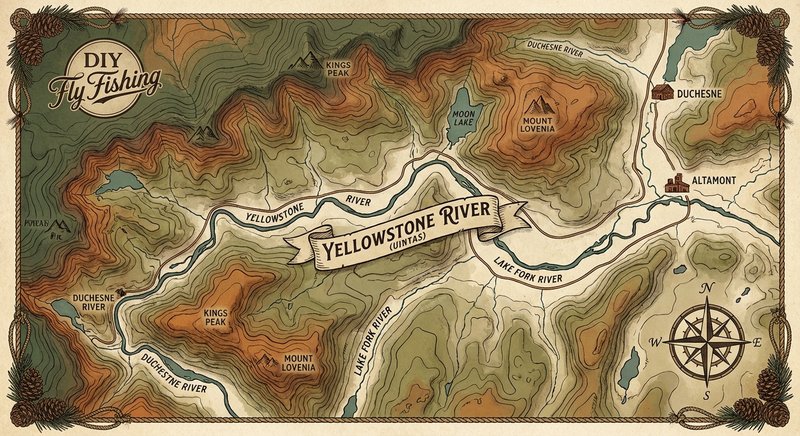
Yellowstone River (Uintas)
Fly fishing in Utah · Advanced · Best seasons: Summer, Fall
Target Species
Cutthroat Trout
About This Water
Remote Uinta wilderness stream. Wild cutthroat in pristine setting.
Fishing Recommendations
As an expert guide, I often have to clarify for folks that we aren’t talking about the famous river in Montana. The Yellowstone River in the High Uintas of Utah is a hidden gem for the backcountry angler. It is one of the most pristine alpine environments in the lower 48, offering a true wilderness experience for those willing to put in the miles.
Here is your professional guide to fishing the Utah Yellowstone.
🎣 Location Overview
The Yellowstone River of the Uintas originates in the high-altitude basins near Kings Peak, the highest point in Utah. It flows south through deep glacial canyons and sprawling alpine meadows before eventually feeding into the Duchesne River drainage.
What makes this water special is its remoteness and purity. This is a high-gradient freestone stream characterized by "pocket water," boulder gardens, and occasional classic meadow meanders. Unlike the crowded tailwaters of the Wasatch Front, you will likely have miles of river to yourself. The water is gin-clear, ice-cold, and home to some of the purest strains of native trout in the state.
🐟 Target Species & Behavior
The primary prize here is the Bonneville Cutthroat Trout. You will also encounter Brook Trout in the higher elevations and the occasional Rainbow or Cutt-bow in the lower stretches.
- Behavior: Because the growing season at 9,000+ feet is incredibly short, these fish are highly opportunistic. They don’t have the luxury of being picky. If it looks like food and is presented naturally, they will strike.
- Holding Water: In the canyon stretches, look for "the bucket"—the soft water behind large boulders. In the meadow sections, they favor cut banks and the deep heads of pools.
- Feeding: They are primarily insectivores, focusing on stoneflies, caddis, and terrestrial insects that fall from the heavy bankside vegetation.
📅 Best Times to Fish
The window for the Uintas is narrow due to snowpack.
- Optimal Months:
- July & August: This is the prime window. Runoff usually subsides by early to mid-July. This is when the dry fly action is electric.
- September & Early October: My personal favorite. The crowds (which are already small) vanish, the Brookies take on their vibrant spawning colors, and the Cutthroats feed aggressively to bulk up for the long winter.
- Best Time of Day: Unlike valley rivers, there is no need for an early start. The water is cold. Fishing usually peaks from 10:00 AM to 4:00 PM once the sun hits the water and activates the insects.
- Conditions: Watch for afternoon thunderstorms—common in the Uintas. If the water gets a "tea stain" color after a rain, it’s prime time for streamers.
🪰 Recommended Flies & Techniques
You don't need a massive fly box here, but you do need the right profiles.
Top Fly Patterns
- Dry Flies:
- Stimulators (Size 10-14): Orange or Yellow. Mimics the large stoneflies found in the canyons.
- Royal Wulff or Humpy: High visibility is key in the turbulent pocket water.
- Elk Hair Caddis: A staple for evening rises.
- Terrestrials:
- Fat Albert or Foam Ants/Beetles: Crucial for the meadow stretches in August.
- Nymphs:
- Pheasant Tail or Prince Nymph (Size 14-16): Dropped 18 inches behind a big dry fly.
Effective Techniques
- Dry-Dropper: This is the "bread and butter" technique here. Use a buoyant Stimulator as your indicator and hang a weighted nymph below it.
- High-Sticking: In the boulder sections, keep as much fly line off the water as possible to avoid complex drag.
- Stealth: The water is exceptionally clear. In the meadows, stay low and back from the bank, or you’ll see the "V-wake" of a spooked trout before you even cast.
💡 Pro Tips & Local Knowledge
- The "Meadow Stealth" Crawl: In the upper Yellowstone meadows, the fish are surprisingly wary. If you walk right up to the bank, you’re done. I recommend kneeling or "crawling" to the edge and making your first cast from 10 feet back.
- Focus on the Confluences: Where small tributary creeks enter the Yellowstone, the oxygen and food levels spike. These are almost always "honey holes."
- Gear Choice: A 3-weight or 4-weight rod (7'6" to 8'6") is perfect. You want a rod with a delicate touch but enough backbone to turn over a bushy dry fly in the wind.
- Don't Over-Wade: In many spots, the fish are holding right against your own bank. Step into the water only when necessary to cross or reach a far seam.
⚠️ Important Information
- Access: The primary access point is the Yellowstone Canyon Trailhead (north of Mountain Home/Duchesne). Be prepared for a long drive on dirt roads.
- Wilderness Regulations: Much of the prime fishing is within the High Uintas Wilderness. No motorized vehicles or bicycles are allowed. You are on foot or horseback.
- Safety: This is Black Bear and Moose country. Carry bear spray and know how to use it. Also, be aware of Altitude Sickness; you will be fishing between 8,000 and 11,000 feet. Stay hydrated.
- Regulations: A valid Utah Fishing License is required. Always check current Utah DWR proclamations for seasonal changes or specific creel limits (though Catch and Release is highly encouraged for native Cutthroats).
Guide’s Final Word: The Utah Yellowstone is for the angler who values the experience as much as the fish. Pack light, bring a camera for the scenery, and enjoy some of the purest dry-fly fishing left in the American West.
Bug Hatches & Matching Flies
| Hatch | Type | Peak months | Time of day | Hook sizes | Matching flies |
|---|---|---|---|---|---|
| Salmonfly Pteronarcys californica | stonefly | June, July | All day | #4-8 | Rogue River Stone #4-6, Pat's Rubber Leg #6-8, Chubby Chernobyl (Orange) #6-10 |
| Pale Morning Dun (PMD) Ephemerella excrucians | mayfly | July, August | Late Morning/Early Afternoon | #16-18 | Sparkle Dun #16-18, Pheasant Tail #16-18, RS2 (Gray/Olive) #18-20 |
| Golden Stonefly Hesperoperla pacifica | stonefly | July | Morning/Evening | #8-12 | Half-back Stone #8-12, Golden Chubby #10-12, Clark's Stone #10-14 |
| Blue Winged Olive (BWO) Baetis | mayfly | May, September, October | Mid-day | #18-22 | Parachute Adams #18-22, Barr's BWO Emerger #20-22, JujuBaetis #18-22 |
| Yellow Sally Isoperla | stonefly | July, August | Afternoon/Evening | #14-16 | Yellow Sally Stimulator #14-16, Iron Lotus #14-16, Micro-Mayfly (Yellow) #16 |
| Spotted Sedge Hydropsyche | caddis | July, August, September | Evening | #14-18 | Elk Hair Caddis (Tan) #14-18, LaFontaine's Deep Sparkle Pupa #14-16, Goddard Caddis #14-16 |
| Green Drake Drunella doddsii | mayfly | July | Afternoon | #10-12 | Hackle Stacker Drake #10-12, Picket Pin #10-12, Quigley's Drake Emerger #10-12 |
| Terrestrials (Hoppers/Ants) Orthoptera/Formicidae | terrestrial | August, September | Late Morning/Afternoon | #10-18 | Dave's Hopper #10-14, Parachute Ant #16-18, Black Foam Beetle #14-16 |
| Midge Chironomidae | midge | April, May, September, October | Morning | #20-24 | Zebra Midge #20-22, Griffith's Gnat #20-24, Mercury Midge #20-22 |